
Operating System
Data breaches cost businesses billions annually, but 90% of cyberattacks start with stolen credentials. These 10 internal safeguards empower cybersecurity leaders to build impenetrable data protection frameworks before threats emerge.
Zero Trust Network Access Implementation Guide

Tired of assuming every device on your network is trustworthy? Zero Trust Network Access (ZTNA) flips the script by requiring verification for every connection—whether it’s a remote laptop or an internal server. This model replaces outdated perimeter security with continuous authentication, ensuring only authorized users and devices access sensitive resources.
With ZTNA, you enforce identity-based access controls using multi-factor authentication (MFA) and device posture checks before granting access. Solutions like Cloudflare Access or Zscaler Private Access integrate seamlessly with existing infrastructure, supporting hybrid workforces by validating users regardless of location. The result? No implicit trust, meaning even compromised credentials can’t bypass security layers. 💻
Ideal for organizations with remote teams or sensitive data, ZTNA is the foundation for modern cybersecurity—especially when paired with conditional access policies. Start small with pilot departments to prove its value before full rollout. ⚡
Automated Data Loss Prevention Policies

Accidental data leaks happen in seconds—one misplaced email, one unencrypted USB transfer, and sensitive files vanish. Automated Data Loss Prevention (DLP) policies stop these leaks before they start by scanning content in real time, not just at the network edge.
Modern DLP solutions like Symantec DLP or Microsoft Purview use AI-powered contextual awareness to detect PII (Personally Identifiable Information), financial data, or proprietary documents—even in unstructured formats. They block transfers via email, cloud storage, or removable drives while allowing legitimate business operations to continue. The best tools integrate with Microsoft 365, SharePoint, and endpoint devices for seamless enforcement.
This is the safeguard for compliance-heavy industries (healthcare, finance) or any team handling sensitive client data. With 93% of breaches involving human error, automated DLP reduces risk without adding workload. ✨
Privileged Access Management Framework
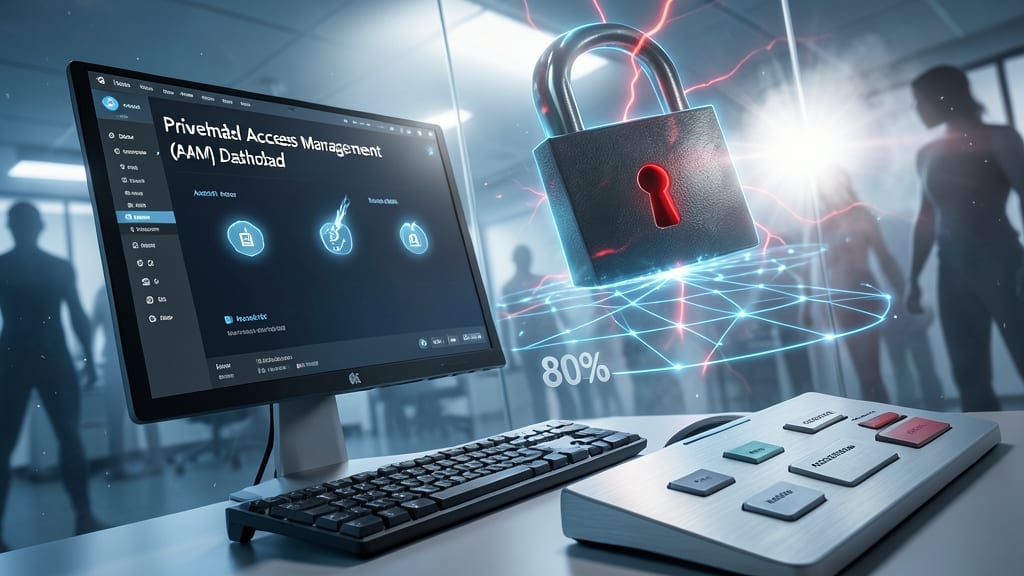
While firewalls and DLP tools guard your perimeter, the real danger often lurks inside—where 80% of breaches originate from compromised credentials. A Privileged Access Management (PAM) framework flips the script by granting admin-level access only when absolutely needed, then revoking it immediately after.
With just-in-time (JIT) access, admins get temporary, time-bound permissions (e.g., 15-minute sessions) paired with multi-factor authentication (MFA) for critical systems like databases or financial servers. Solutions like CyberArk or BeyondTrust automate session recording and credential vaulting, ensuring no lingering backdoors. The result? Zero standing privileges—no more "always-on" admin accounts that attackers can exploit.
This is non-negotiable for finance, healthcare, or government sectors, where insider threats and credential abuse are top risks. Even SMBs handling sensitive data should prioritize it—because one compromised admin account can unlock your entire network. ✨
Endpoint Detection and Response Deployment

Tired of traditional antivirus failing against sophisticated malware? Endpoint Detection and Response (EDR) shifts the game by analyzing device behavior—not just signatures—to block threats before they execute.
Solutions like CrowdStrike Falcon or Microsoft Defender for Endpoint provide real-time behavioral analytics, threat hunting capabilities, and automated response actions. They monitor fileless attacks, ransomware, and zero-day exploits across Windows, macOS, and Linux—even on mobile devices. The key advantage? Zero trust at the endpoint level, where suspicious activity triggers instant containment without waiting for updates.
This is your best defense for organizations handling sensitive data, especially those with remote workforces or high-value assets. 💻
Secure Password and Credential Management

Tired of password fatigue draining productivity while leaving your company vulnerable? Modern credential management solutions enforce NIST-compliant complexity rules (12+ characters, no reuse) and replace passwords entirely with biometric verification or FIDO2 hardware tokens—eliminating phishing risks at the source.
Platforms like Microsoft Entra ID or 1Password Teams integrate with Active Directory to auto-generate and rotate credentials while enforcing zero-trust principles for every login. Hardware tokens (YubiKey) provide phishing-proof authentication even if credentials are compromised, while biometric options (Windows Hello, Face ID) deliver frictionless access for authorized users only.
This approach is ideal for companies handling sensitive data (healthcare, finance) where compliance audits demand strict credential policies—and where employees juggle dozens of accounts daily. 💻
Encrypted Data Storage Solutions

When sensitive data sits idle in databases or cloud repositories, transparent encryption ensures it stays secure without sacrificing usability. Unlike traditional encryption that requires manual key management, these solutions automatically encrypt data at rest—whether in SQL databases, file systems, or cloud storage—while maintaining seamless access for authorized users.
Tools like AWS KMS, Azure Disk Encryption, or VeraCrypt provide AES-256 encryption by default, with options for hardware-backed keys (HSMs) to prevent theft. For databases, PostgreSQL’s pgcrypto or SQL Server’s Transparent Data Encryption (TDE) encrypt tables without altering application logic. Cloud providers offer client-side encryption (e.g., Google Cloud’s Customer-Managed Encryption Keys), ensuring even admins can’t decrypt data without explicit permissions.
This approach is ideal for compliance-heavy industries (healthcare, finance) or any team handling PII, trade secrets, or intellectual property. The best part? Encryption happens automatically—no extra steps for developers or IT teams. ✨
Employee Security Awareness Training

Your employees might be your biggest security risk—or your strongest defense. Interactive phishing simulations and role-based cybersecurity workshops turn staff into human firewalls, reducing costly human errors that bypass even the best technical safeguards.
Platforms like KnowBe4 or PhishMe deliver customized phishing tests that mimic real attack vectors, while gamified training modules reinforce best practices through engaging scenarios. These programs track progress across departments, ensuring everyone—from interns to executives—understands password hygiene, social engineering tactics, and secure file-sharing without overwhelming technical jargon.
Ideal for companies where one click could expose customer data, this training transforms passive employees into proactive defenders. The ROI? Fewer breaches, lower insurance premiums, and a culture where security isn’t just IT’s job—it’s everyone’s. ✨
Network Segmentation Architecture

When a breach occurs, the last thing you want is an attacker freely roaming your network like it's a weekend open house. Network segmentation architecture acts as a digital moat, isolating critical systems (like HR databases or payment gateways) from general traffic to contain breaches before they spread.
This isn't just one firewall—it's a layered approach using VLANs, micro-segmentation, and zero-trust principles to create isolated zones. For example, a compromised workstation in Marketing can't pivot to Finance's servers. Tools like Cisco ACI or VMware NSX automate this with policy-based controls, while NIST SP 800-40 provides guidelines for designing these architectures. The result? A 90% reduction in lateral movement during incidents, according to Gartner.
Perfect for enterprises with high-value assets (think healthcare or fintech) or any business handling sensitive data. Even SMBs benefit by segmenting IoT devices from corporate networks—because why give attackers a free pass through your entire infrastructure? ✨
Incident Response Playbook Development

When a breach happens, every minute counts—but without a clear plan, chaos follows. An Incident Response Playbook turns panic into precision by defining step-by-step procedures for detecting, containing, and recovering from security incidents, complete with escalation paths and predefined roles.
This isn’t just a document; it’s a battle-tested framework that includes real-time alert triggers, containment protocols (like isolating infected systems), and post-incident review templates to refine defenses. Tools like Splunk or IBM Resilient integrate with your existing security stack to automate playbook execution, while NIST’s IR framework provides industry-approved templates for customization.
Ideal for compliance-heavy industries (healthcare, finance) or companies handling sensitive data, this playbook ensures faster recovery times and minimized downtime—because when seconds matter, you need a plan that doesn’t leave room for guesswork. ✨
Regular Security Audits and Penetration Testing

Think of security audits and penetration testing as your company’s fire drill for cyber threats—except instead of practicing evacuations, you’re stress-testing your defenses against real-world attack scenarios. Unlike static security tools, these assessments uncover vulnerabilities that even the most robust systems might miss, thanks to the expertise of third-party cybersecurity professionals simulating sophisticated attacks.
During a penetration test, ethical hackers mimic tactics used by cybercriminals—phishing, exploit kits, or insider threat scenarios—to identify weak points in your network, applications, or human processes. Compliance assessments ensure your safeguards meet industry standards like GDPR, HIPAA, or SOC 2, reducing legal risks. The best providers deliver detailed reports with remediation steps, turning findings into actionable improvements.
This safeguard is a must for organizations handling sensitive data, like healthcare providers or financial institutions, but even mid-sized businesses benefit from uncovering hidden risks before attackers do. 💡