
Operating System
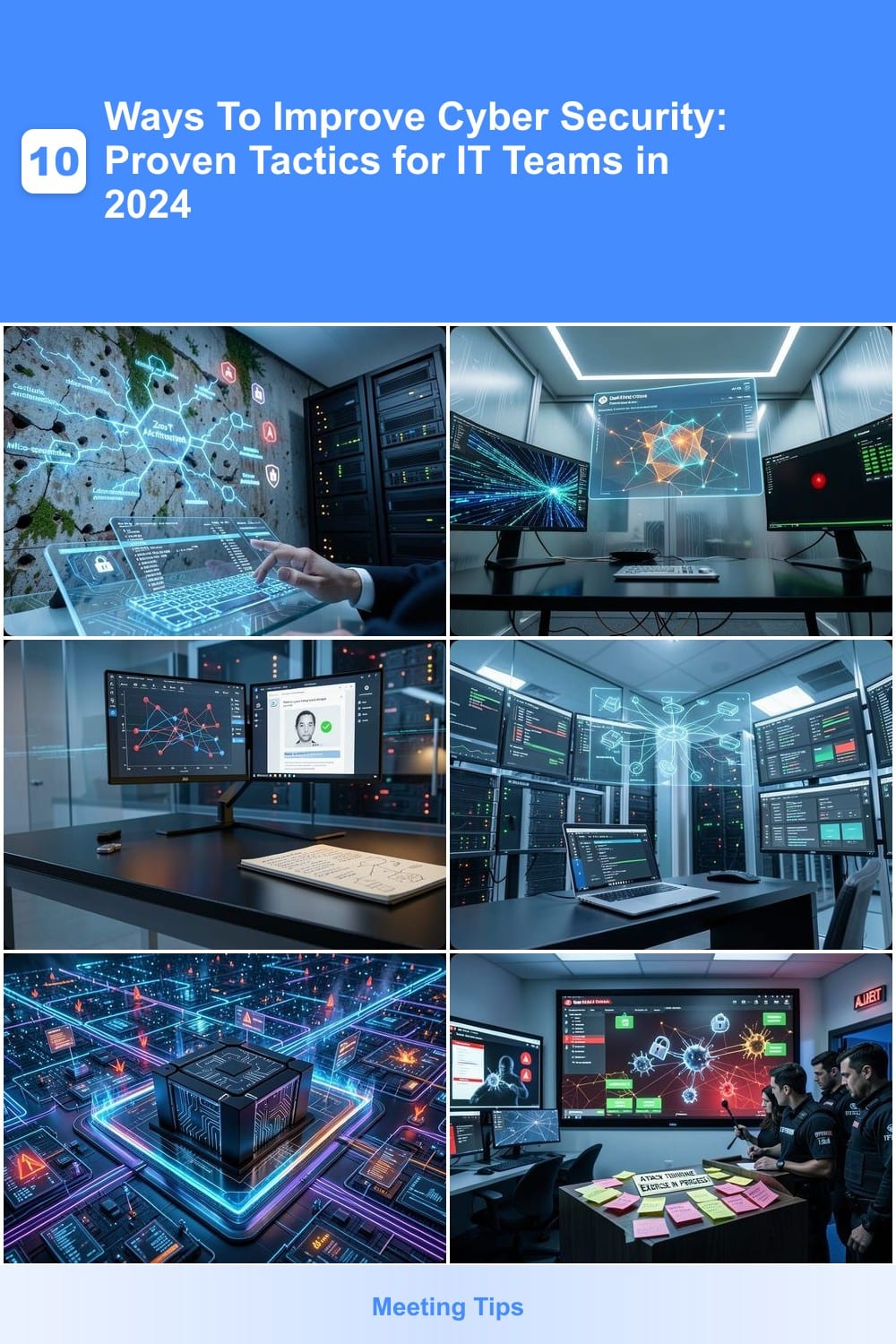
Cyber threats evolve daily, but these 10 proven cybersecurity tactics will future-proof your IT infrastructure in 2024. From zero-trust architecture to AI-driven threat detection, we cover actionable strategies that balance security with operational efficiency.
Implement zero trust network architecture

Tired of relying on outdated "castle-and-moat" security models that assume threats lurk outside your network? Zero Trust Architecture (ZTA) flips the script by treating every access request—whether from inside or outside—as a potential threat, requiring explicit verification.
With ZTA, you enforce continuous authentication (not just at login), micro-segmentation to limit lateral movement, and device posture checks before granting access. Solutions like Microsoft Azure AD Zero Trust or Cisco SecureX integrate seamlessly with existing systems, while NIST’s Zero Trust Maturity Model helps tailor deployment to your organization’s risk tolerance. The result? A 90% reduction in lateral movement risks during breaches, per Forrester Research.
This approach is a game-changer for hybrid cloud environments (e.g., AWS + on-prem) and remote-first teams where traditional VPNs fall short. Start with identity-first policies and scale from there. ✨
Deploy AI-powered threat detection systems

Tired of drowning in security alerts that turn out to be false alarms? AI-powered threat detection systems like Darktrace and CrowdStrike analyze network traffic patterns using machine learning models trained on billions of data points, spotting subtle deviations that traditional signature-based tools miss.
These systems cut through the noise by reducing false positives by 70% while maintaining real-time monitoring. Features like behavioral anomaly scoring and automated containment workflows ensure threats are neutralized before they escalate. Integration with existing SIEM tools means you can scale security without rewriting your entire infrastructure.
Perfect for mid-sized enterprises and large organizations where security teams are stretched thin, AI threat detection delivers 24/7 vigilance without the burnout. 💡
Enforce multi-factor authentication everywhere

If you’ve ever wondered why hackers keep breaking in despite firewalls and antivirus, the answer is simple: passwords alone aren’t enough. Multi-Factor Authentication (MFA) adds that critical second layer, blocking 99.9% of automated attacks—the kind that exploit weak credentials in seconds. Unlike reactive security tools, MFA stops breaches before they start by requiring something you know (password) and something you have (phone, token, or biometric).
Modern MFA solutions like Microsoft Authenticator, Duo Security, or YubiKey integrate seamlessly with VPNs, SaaS platforms (Slack, Salesforce), and cloud services, ensuring no single point of failure. Even better, TOTP (Time-Based One-Time Passwords) or FIDO2 hardware keys eliminate SMS vulnerabilities—no more intercepted codes. For IT admins, conditional access policies in Azure AD or Okta let you enforce MFA only where it matters most: privileged accounts and external-facing apps.
This isn’t just for enterprises—small businesses and freelancers using shared devices or public Wi-Fi should enable MFA too. With most breaches starting with stolen credentials, MFA is the simplest, highest-impact upgrade you can make today. 💪
Automate patch management for all systems

Forget manually chasing updates across hundreds of devices—automated patch management is the secret weapon for IT teams drowning in unpatched systems. Tools like WSUS (Windows Server Update Services), SolarWinds Patch Manager, or Tanium handle everything from Windows 10 to Linux servers and even IoT devices, ensuring critical fixes deploy before exploits hit the wild.
These solutions don’t just apply patches—they prioritize by risk, schedule deployments during off-hours to avoid downtime, and generate compliance reports for audits. With 80% of vulnerabilities patched automatically, you’re not just reactive—you’re proactive. Plus, many integrate with existing SIEM tools for seamless threat intelligence sharing.
Perfect for MSPs, mid-sized enterprises, or any team juggling mixed environments, this approach turns a tedious chore into a fully automated, audit-ready security layer. ⚡
Segment networks with micro-perimeters

When a breach happens, the real damage often comes from attackers moving freely across your network—not just the initial break-in. Micro-perimeter segmentation stops them in their tracks by creating ultra-granular security zones, like digital moats around every critical system.
Tools like Illumio Core or Tufin SecureTrack let you define zero-trust micro-segments at the workload level, not just subnets. This means a compromised HR database won’t automatically grant access to finance servers. For HIPAA-compliant hospitals or PCI DSS banks, these micro-perimeters automatically enforce compliance boundaries without manual rule updates. The result? Up to 90% reduction in lateral movement during breaches, according to Gartner.
This approach works best for organizations juggling multiple compliance domains (like healthcare’s HIPAA + ITAR for defense contractors). Start by isolating high-value assets like patient records or payment systems, then gradually expand to other departments. 💪
Conduct quarterly red team exercises

Think of red team exercises as your organization’s cybersecurity fire drill—but instead of practicing evacuations, you’re testing how your defenses hold up against real-world attacks. Unlike static audits, these simulations reveal gaps attackers would exploit, like misconfigured cloud storage or weak password policies, before they become costly breaches.
Quarterly exercises typically involve ethical hackers using tools like Metasploit or Burp Suite to mimic phishing, credential stuffing, or insider threats. The goal isn’t to fail, but to uncover actionable vulnerabilities—like a PCI DSS non-compliant payment system or a SOC2 misconfigured API—with detailed reports that map directly to compliance requirements.
This approach is perfect for financial firms, healthcare providers, or e-commerce platforms facing audits. It’s also cost-effective compared to breach cleanup—80% of organizations that conduct red teaming report fewer incidents within a year. 💪
Encrypt all data in transit and at rest
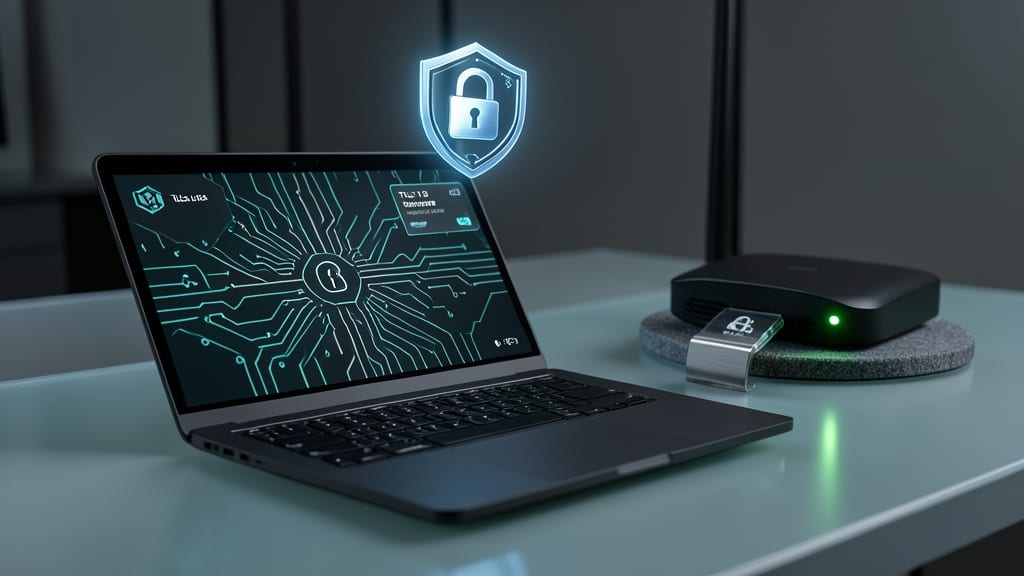
Lost or stolen devices don’t have to mean exposed data—full-disk encryption and TLS 1.3 ensure your sensitive files stay locked down, whether they’re stored locally or transmitted across networks. This isn’t just a checkbox; it’s your last line of defense against compliance violations and reputational damage.
Modern solutions like BitLocker (Windows), FileVault (macOS), and LUKS (Linux) encrypt data at rest with AES-256, while TLS 1.3 secures communications with zero-round-trip-time (0-RTT) handshakes for instant protection. Tools like VeraCrypt add portable encryption for removable drives, and Cloudflare’s Always On SSL extends this to web traffic—no configuration required.
If your organization handles patient records (PHI), customer data (PII), or trade secrets, encryption isn’t optional—it’s a legal and ethical imperative. Start with built-in OS tools, then layer on cloud-based key management for enterprise-grade control. 🔧
Train employees with phishing simulation drills

Most cyberattacks start with a single click—yet 90% of breaches involve human error. For SMBs stretched thin on security budgets, phishing simulation drills offer a 60% reduction in human error risks without breaking the bank. Unlike static training videos, these tools send realistic, randomized phishing emails to employees and track their responses in real time.
Platforms like KnowBe4 or GoPhish provide customizable templates mimicking CEO fraud, invoice scams, or fake login pages. You’ll see which employees fall for social engineering tricks (often the same ones attackers use) and deliver personalized coaching to close gaps. Many solutions integrate with Microsoft 365 or Google Workspace, so setup takes less than an hour.
This is the #1 cost-effective security upgrade for teams where budget limits advanced tools. Even a monthly subscription pays for itself by preventing one costly breach. 💡
Implement cloud-native security posture management

If your DevOps team is juggling AWS, Azure, and GCP while Kubernetes clusters multiply like rabbits, you need cloud-native security posture management to keep misconfigurations from becoming your worst nightmare. Unlike traditional security tools that treat cloud environments as afterthoughts, this approach integrates directly into your deployment pipelines—catching vulnerabilities before they hit production.
Platforms like Prisma Cloud or Open Policy Agent (OPA) scan your infrastructure-as-code templates (Terraform, Kubernetes YAML) in real-time, flagging over-permissive IAM roles, exposed S3 buckets, or unencrypted database connections. They even integrate with CI/CD pipelines to block deployments that violate security policies—no more "oops, we left that S3 bucket public for three months." The best solutions offer multi-cloud compliance dashboards so you can prove HIPAA or GDPR readiness with a single click.
This is the secret weapon for teams adopting serverless architectures or hybrid cloud setups—where traditional perimeter defenses crumble. 💻
Establish incident response playbooks for critical scenarios

When a breach hits, every minute counts—yet many organizations fumble through responses without a clear plan. Incident response playbooks cut recovery time by 40% by mapping out step-by-step actions for ransomware, DDoS, or credential theft, ensuring no critical step is missed under pressure.
Start with NIST SP 800-61 as a template, then customize for your environment. Include automated containment workflows (e.g., isolating infected hosts) and escalation paths for legal/compliance teams. Tools like Splunk ES or IBM Resilient integrate with SIEMs to trigger playbooks automatically when threats are detected.
This isn’t just for enterprises—financial institutions avoid fines by proving rapid response, while healthcare providers protect PHI under HIPAA. Even small teams benefit from documented procedures during chaotic incidents. ✨